 |
| Parental Alienation |
| New research shows that 59,1% of children and parents have experienced parental alienation behaviour following separation. |
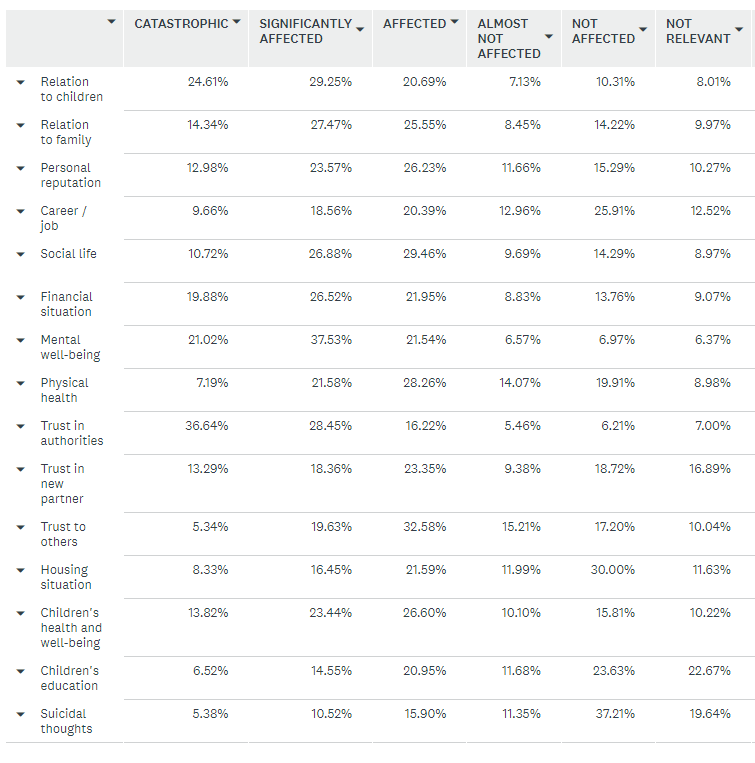
| Professor Ben Hine, Psychology (UK) presented at the 6th International Conference on Parental Alienation, research findings from the UK population. A representative study shows that over 39%, and possibly up to 60%, of children and parents experiencing parental separation have encountered parental alienation behaviour in a minor, moderate, or severe degree. 1. The study was independent. 2. There was a predominance of white and heterosexual participants, with an equal gender distribution. 3. The age range was 18-75 years, covering various life stages. 4. 39.2% experiencing parental alienation when asked directly. 5. 59.1% experienced parental alienation based on measurements. 6. There was no significant difference in experiences was found between demographic groups. 7. There was clear correlation between parental alienation and later mental health issues, such as PTSD, depression, and suicidal thoughts. Professor Ben Hine emphasized the necessity of focusing on mental health support for those experiencing parental alienation, as well as for those causing it. Also legal reforms are needed to prevent, identify, and address this behavior. Depending on the country, 10-30% of children today either have no contact or only minimal contact with one of their parents. This can be due to inappropriate parenting behavior and lack of accountability, but parental alienation is one of the major challenges for children, families, and society as a whole. The Nordic Fathers network The Nordic Fathers network agrees with the research findings, as this reflects the reality they see among children and parents in the population, to varying degrees. This has a significant impact on children’s lives and later negative social inheritance. It is common for children of parents who themselves grew up without one of their parents (especially fathers) or had poor contact with their fathers, to practice parental alienation. This should be prevented through legislation and practice, as it often continues to affect the children later in life. Research has identified characteristics that help recognize when parental alienation is occurring. It can affect both fathers and mothers in society. The legislation leads to unequal treatment of children and parents, meaning we fail to identify those who perpetrate parental alienation and those who are the actual victims of it, which is a form of psychological abuse. This results in wasted time and misused public resources. The Women’s Movement It is serious when the well-funded international women’s lobby denies that parental alienation happens in reality. The same tactics are often used in the context of new legislative proposals aimed at benefiting society and children as a whole. When it concerns fathers, one often sees the international women’s movement conducting unserious campaigns in the media, national parliaments, and within their political networks. Parental alienation is no exception. They have, for example, tried to start a word war over the term or claim that the UN has rejected the concept, which has been proven untrue. The women’s movement has planted its own so-called special rapporteur, who used their own sources and created a report that in most nordic countries would end up in the Scientific Ethics Committee. Hundreds of organizations and researchers have complained about the report and called for the author’s resignation. As just one example in the report, only the National Organization for Crisis Centres is used as a source in Denmark. They provides a standard crisis center declaration that automatically labels men as violent, without having spoken to them or being aware of the woman’s social, health, or criminal history. This occurs with public funding, but where is the expertise and quality? Everyone can call parental alienation whatever one wants, but the reality is that it happens and is widespread, partly because the legislation has not kept pace with current needs. The WHO classifies it as a child-parent relational problem, while others prefer to call it visitation harassment or the loss of contact between children and parents. The fact is, it occurs and is widespread in society, so it should be prevented with legislation that treats all children and parents equally from the start, rewarding good parenting behavior, rather than focusing on gender. ILLUSTRATION: Survey results from 3500 parents asked about the effect of parental alienation by the World Parents Organization. |
 |
 Avskilda barn - Secluded children